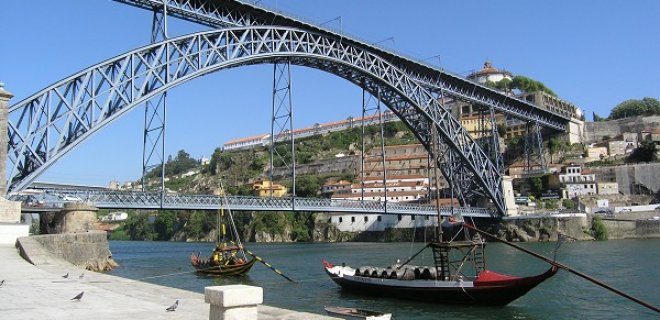
It doesn’t matter if you’ve read every guidebook or memorized every pin on the map. You still have to walk it. The Dom Luís I Bridge isn’t just a crossing; it is the heartbeat of Porto. Opened in 1886 by a disciple of Gustave Eiffel, this steel monument doesn’t just connect two banks—it defines the city’s skyline. Standing 45 meters above the Douro River, its 385-meter span is widely considered the most magnificent of the six bridges spanning this waterway.
Why does it matter to you, the traveler? Because it offers a choice that changes your entire perspective of the port.
Two Levels, Two Different Worlds
The bridge is a marvel of engineering, but it’s also a practical tool for seeing Porto. You can walk across on either deck, and the experience is completely different depending on which level you choose.
The Upper Deck: This is the pedestrian and metro walkway. It sits high above the traffic. The view here is panoramic. You see the entire curve of the Douro, the red-tiled roofs of Ribeira, and the wine cellars of Vila Nova de Gaia in the distance. It’s windy. It’s open. It’s where you go to feel the scale of the river.
The Lower Deck: This is closer to the water. The arches loom over you. The sound of the river is louder. The light is dimmer, filtered through the steel lattice. It feels more intimate. More historic.
Where to Cross and When
You don’t just “cross” the bridge. You use it to move between Porto (the north bank) and Vila Nova de Gaia (the south bank). This isn’t just a transit hack; it’s the main event.
Start your journey in the Ribeira district. This is the UNESCO-listed waterfront area. It’s crowded. It’s loud. It’s beautiful. Grab a coffee. Take a photo. Then, walk up the steep, cobbled steps to the base of the bridge.
Enter the lower deck. Walk toward Gaia. The steel girders create a rhythmic pattern against the sky. When you emerge on the other side, you’re in Gaia. The air smells different here—damp stone and aged wood. This is where the port wine lodges are.
Timing matters. Go at sunset. The light hits the ironwork at a specific angle. The river turns copper. The city lights begin to flicker on below. If you go at noon, it’s functional. If you go at dusk, it’s cinematic.
Practical Details for Your Trip
- Cost: Free. Walking across costs nothing. Taking the metro across costs a single ticket, which you can also use for buses and trams.
- Height: 45 meters (148 feet) above the river.
- Length: 385 meters total.
- Best Viewpoint: Stand in the middle. Look down. Look up. Look across.
- Logistics: The bridge connects the Livramento metro station (Porto side) to the Gaia-Nossa Senhora da Conceição station (Gaia side). You
The Palace of the Stock Exchange: A Gilded Detour
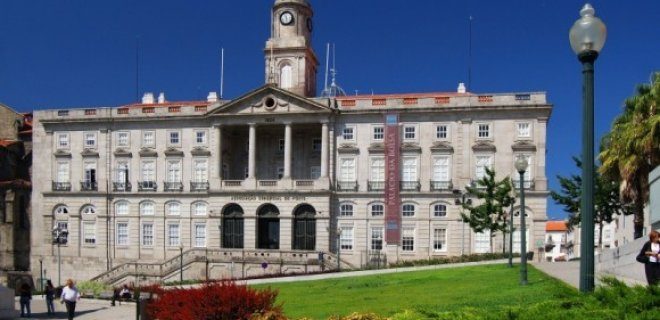
If you are hunting for the best time to visit the Palacio da Bolsa Porto, aim for late afternoon. The light hitting the gold leaf in the Arab Room is absolute theater. But honestly, skip the standard guided tour if you want to see the real soul of the building. The crowd swarms the Arabic Room like bees. It’s small. Claustrophobic, even. You’ll stand shoulder-to-shoulder with strangers, trying to read the Kufic script on the walls while someone else’s camera blocks your view of the muqarnas ceiling.
“The Arab Room is the jewel in the crown, but the silence of the Merchant Hall is what stays with you.”
The Palacio da Bolsa was built in the 19th century by the city’s Commerce Association. Neo-classical outside. Opulent inside. It’s a UNESCO World Heritage site, sure. But that label feels heavy when you’re elbowing through a tour group. Look at the frescoes. Look at the dome. These details demand patience, not a rush.
How do you beat the crowds? Go early. Or go during the winter months when the days are short and the tourists are fewer. The entrance fee is reasonable. Much cheaper than you’d expect for this level of craftsmanship.
Sé do Porto: Stone and Silence
Move away from the river. Go to the hilltop. The Sé do Porto Cathedral stands as a fortress against the sky. It’s not just a church. It’s a timeline of Portuguese history carved in stone. Romanesque roots. Gothic additions. Baroque flourishes. They’re all there, layered like old paint.
Why does it matter? Because the view from the ramparts is unbeatable. You look down on the Ribeira district. You see the Douro River snaking toward the Atlantic. The city sprawls out, red tiles glowing in the sun. It’s the view that makes the climb worth it.
The cathedral is free to enter. The cloister costs a few euros. Is it worth it? Yes. The cloister is quiet. Peaceful. A stark contrast to the chaos outside. You can sit on the stone benches. Watch the light shift across the columns. Listen to the wind.
What’s the best time to visit? Late afternoon. The golden hour hits the stone. Shadows lengthen. The heat breaks. You’ll see fewer people. You’ll get the photo you want. You’ll feel the weight of centuries.
Don’t miss the tomb of King Afonso Henriques. The first King of Portugal. He’s buried here. It’s simple. Unassuming. But standing there, you realize you’re standing on ground that shaped a nation.
The stairs are steep. Wear good shoes. The cobblestones are uneven. But the climb clears your head. By the time you reach the top, the noise of the city fades. All that’s left is the stone. The sky. And the view.
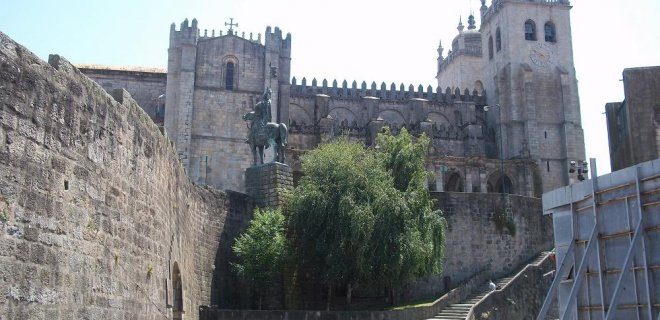
Porto’s Cathedral: Where Styles Clash and Views Reign
The Sé do Porto didn’t finish rising until the mid-18th century. It’s a weird time capsule. You walk in expecting one thing. You get a collision. Romanesque Barlob sits next to Gothic arches. The styles don’t just coexist. They fight for attention.
And the tiles. Yes, the azulejos. They cover everything. But despite the heavy Baroque overlay, the soul of the building feels distinctly Gothic. Pointed arches reach up. The weight of the stone presses down. Then there’s the marble. Intricate carvings soften the harsh lines. It adds a layer of quiet luxury to the medieval grit.
Why does this matter to your itinerary? Because it’s a must-see for anyone mapping out Porto’s highlights. But it’s not just about the history. It’s about the elevation. The cathedral sits on a high point. You climb the stone steps. You reach the terrace. Suddenly, the red roofs of the Ribeira district spread out below you. The Douro River cuts through the valley like a silver ribbon. You don’t just see Porto. You absorb it.
Douro River
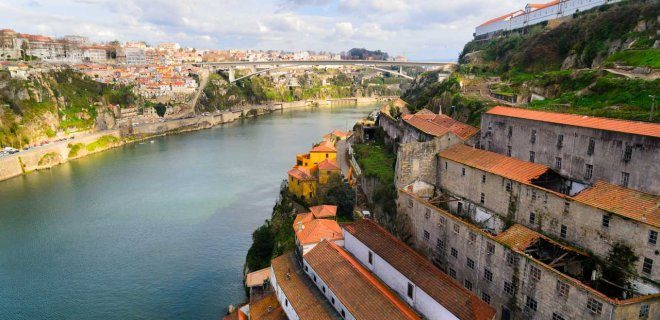
Douro Nehri, İber Yarımadası’nın en uzun nehirlerinden biri olarak yaklaşık 900 kilometrelik bir yolculuğu geride bırakıyor. Şehrin kalbideki bu su kütlesi, Atlantik Okyanusu’na dökülmeden önce Porto’yu ikiye bölüyor. Köprülerden nehri izlemek ise fiyatsız değil; ama manzaranın kendisi bedavaya yakın bir lüks sunuyor. Nehrin kıyılarında balıkçı restoranları ve hediyelik eşya dükkanları var. Yürürken durup bakmanızı öneririm.
### Clerigos Kulesi’ne Tırmanış
Clerigos Kulesi, Porto’nun en ikonik yapılarından biri. 75 metre yüksekliğindeki bu barok kule, şehrin silüetinde belirgin bir yer tutuyor. İçeri girdiğinizde, dar ve sarmal merdivenler sizi tepeye taşıyor. Tırmanmak biraz yorucu olabilir. Ama tepede sizi bekleyen manzara buna değer. Şehri yukarıdan görmek, taş binaların arasında kaybolmuş gibi hissetmenizi sağlayacak.
Kule, 18. yüzyılda inşa edilmiş. Mimar Nicolau Nasoni’nin eserlerinden biri. İçindeki dekorasyonlar, dönemin zenginliğini yansıtıyor. Dışarı çıktığınızda, şehrin çatılarını ve nehri görebileceksiniz. Özellikle gün batımında, ışığın taşlara vurması büyüleyici.
### Nehir Kıyısında Zaman Geçirme
Nehrin kıyısında yürümek, Porto’yu keşfetmenin en iyi yollarından biri. Balıkçı restoranları, taze deniz ürünleri sunuyor. Fiyatlar turistik bölgelerde biraz daha yüksek olabilir. Ama lezzet buna değer. Hediyelik eşya dükkanlarında, el yapımı seramikler ve şarap şişleri bulabilirsiniz.
Nehrin etrafında yürürken, köprülerin mimarisine dikkat edin. Dom Luís Köprüsü gibi yapılar, hem işlevsel hem de estetik açıdan önemli. Alt kısımdan geçerken, nehrin gürültüsü ve rüzgarın sesi şehrin ritmini hissettiriyor.
### Nereye Dikkat Etmeli?
Nehrin kıyısında yürürken, bazı noktalara özellikle dikkat etmeniz gerekiyor. Ribeira semti, UNESCO Dünya Mirası Listesi’nde yer alıyor. Dar sokakları ve renkli binalarıyla dikkat çekiyor. Burada kaybolmak, keşfetmek anlamına geliyor. Her köşe başka bir sürpriz sunuyor.
Nehrin diğer tarafında ise, daha sakin sokaklar var. Yerel halkın yaşadığı bölgelerde, daha otantik bir deneyim yaşayabilirsiniz. Bu bölgelerde, turist kalabalığı daha az. Fiyatlar daha uygun. Ama ulaşım biraz daha uzun sürebilir.
### Ne Zaman Gitmeli?
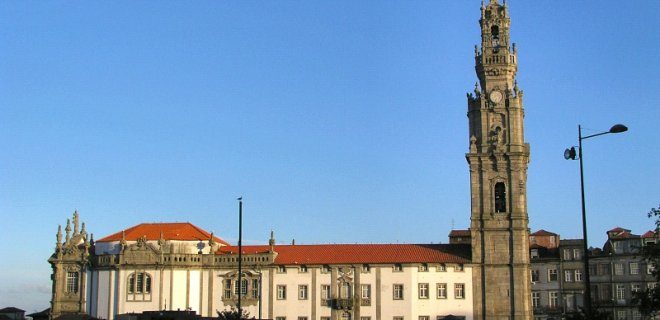
The Climb to the Top: Clerigos Tower
You’re looking at Porto’s skyline, and there it is—the Clerigos Tower (Torre dos Clérigos). Finished in the mid-18th century, this Baroque bell tower doesn’t just poke into the sky; it anchors the city. It stands 76 meters tall, a heavy, stone statement of power that has become synonymous with Porto itself.
Getting up there is cheap. Ridiculously so. You pay just 3 Euro (roughly 10 TL) to enter. That’s it.
But don’t let the low price tag fool you into thinking this is a stroll. You have to climb 240 steps.
The exit platform is narrow. Tight. The air gets thin, and your legs will burn. It’s a steep, yorucu (exhausting) climb that tests your patience as much as your cardio. The stone walls press in on you. It’s claustrophobic at points.
Is it worth it?
Absolutely.
When you finally push through the narrow door and hit the viewing deck, the view hits you like a physical blow. The terracotta roofs of Ribeira, the Douro River snaking below, the historic center stretching out in every direction. The light changes. The city opens up. That moment at the top justifies every single step of that brutal climb.
Serralves Contemporary Art Museum
Just when you think you’ve seen enough of Porto’s historic heart, you pivot. You move away from the narrow, chaotic streets of the old town and head toward the green, quiet expanse of Serralves.
This isn’t just a museum. It’s a sanctuary.
The Serralves Museum of Contemporary Art sits inside a massive estate that feels worlds away from the city center. The architecture is modern, sleek, and minimalist—a stark contrast to the Baroque heaviness of the Clerigos Tower you just left.
Inside, you’ll find rotating exhibitions of contemporary art that challenge and provoke. But honestly? The real draw is the grounds.
The Serralves Park covers 18 hectares of landscaped gardens, woodlands, and water features. It’s designed to be a place for contemplation. You can walk for hours without seeing a single piece of art and never feel like you’ve wasted your time. The paths wind through native trees. The light filters through the canopy. It’s a reset button for your senses.
Visiting here feels like stepping into another country. The silence is different. The pace is slower. You aren’t rushing to catch a bus or dodge a tram. You’re just walking. Watching the light change on the grass. Listening to the wind in the trees.
It’s a necessary counterweight to the intensity of the old town. You need this space to process what you’ve seen. To breathe. To remember that Porto isn’t just about climbing steep hills and looking down at red roofs. It’s also about stillness. About the quiet power of a well-tended garden.
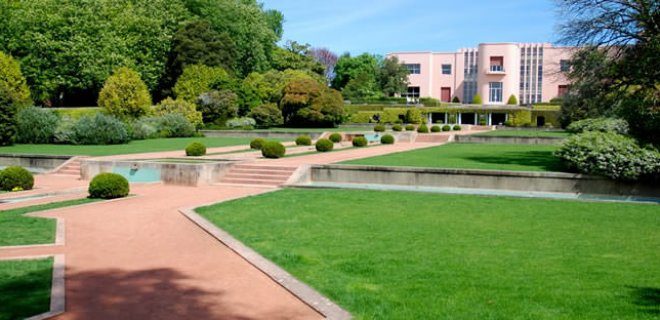
Where to find the art that defines the city
The museum opened nearly three decades ago. It has since become a staple for the hundreds of thousands of tourists who flock here every single year. The purpose was specific from the start: to showcase the work of local artists. You won’t find European masters or ancient relics here. The focus is entirely on the homegrown talent that shapes the city’s identity.
What hits you first is the sheer volume of drawings. Hundreds of them. Each one distinct. Each one crafted by different hands and held together by a shared spirit. It is easy to get lost in the lines. Visitors tend to stand still for long stretches. They watch. They listen to the silence of the paper.
“The collection isn’t just displayed; it feels like a conversation between the artist and the viewer.”
If you need a break from the indoor galleries, step outside. The garden is massive. It isn’t some afterthought tucked behind the main entrance. It is a significant part of the experience. Lush greenery dominates the space. It feels less like a landscaped plot and more like an extended room of the museum.
The grounds are dotted with sculptures. Each piece varies in style and material. Some are abstract. Others representational. They are scattered near reflecting pools that catch the light differently depending on the time of day. Walking through this area offers a chance to process what you’ve just seen inside. The combination of art, water, and green space creates a rare sense of calm in what is otherwise a busy tourist hub.
Practical details for your visit
- Best time to go: Early morning or late afternoon to avoid the peak crowds and catch the best light in the sculpture garden.
- Duration: Plan for at least two hours. The drawing collection is dense and rewards slow viewing.
- What to expect: No flash photography inside. The garden is open to the public even if you don’t enter the main hall.
- Logistics: Wear comfortable shoes. The grounds are extensive and involve significant walking.
The museum doesn’t try to be everything to everyone. It sticks to its mandate. It highlights the local scene. For travelers looking to understand the cultural pulse of this city, this place offers a direct line to that energy. The contrast between the intense focus of the drawings and the open expanse of the garden provides a complete picture. Not just of the art. But of the atmosphere it was created in.
You leave with more than just memories of static images. You carry the feeling of the space. The quiet. The green. The weight of decades of local creativity.