Legend says a hungry man prayed to the gods for help. They didn’t send manna. They sent bees. But with a catch. He had to protect them. Nurture them. If he did, they would give him honey. Pollen. Propolis. And something better. Life. New flowers. New fruits. New seeds. A cycle of return.
Doña Eliza Interián Bojarquez tells me this story. We are in Maní. A rural town in Yucatán, Mexico. The air is dry. Oppressively hot. April does not forgive.
Eliza is Mayan. She raises the melipona beecheii. A native stingless bee. It’s small. It’s ancient. It is one of twenty thousand bee species on Earth, but this one? This one matters to her.
Take care of the bee. The bee takes care of the land. The land takes care of you.
We like to think bees are resilient. We are wrong. Pesticides burn them. Deforestation chokes them. Monoculture starves them. We are killing them faster than we can buy local honey. So now? They need us. Not tomorrow. Today.
Maní is a “pueblo mágico”. A magic town, according to Mexican tourism bureaus. Sixty miles southeast of Mérida. Low limestone hills. Deciduous jungles. Cenotes. Deep sinkholes filled with dark, still water. Tourists flock for the cenotes. I’m not interested in the water.
I want the melipona. The Xunán Kab. The Royal Lady.
The Maya started domesticating her over 3,000 ago. Long before European honey bees showed up and disrupted everything. Father Luis Quintal knows the timeline well. He’s an ex-priest now. A beekeeper. His skin is leathery from years under the sun. His eyes crinkle when he smiles. It’s a good smile.
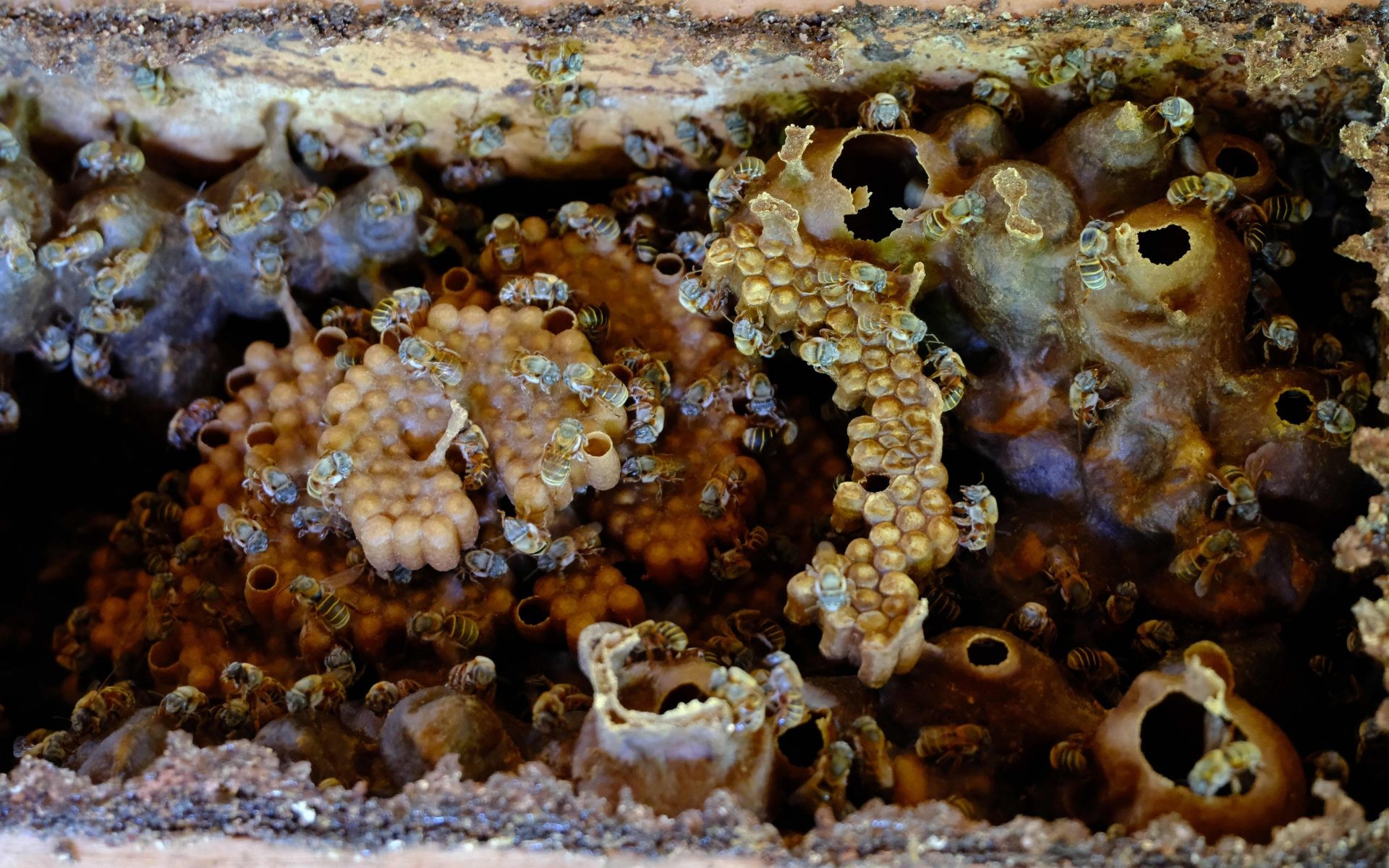
He keeps the bees in jabones. Hives carved from tree trunks. Cedar. Guano palm. Hollowed out cylinders. Plugged like wine bottles with clay seals. Stacked in a pyramid under a palm-leaf roof.
I watch him open one. “Look,” he says. Inside? Five hundred colonies. A queen. Two princesses. Four males. Three thousand workers per hive.
It wasn’t always this vibrant. The European honeybee arrived in the 190s. It’s aggressive. It’s efficient. The melipona crashed. By 1966, there were only five hundred hives left. Five hundred.
Luis stepped in. In 196. While serving the parish. He built U Yits Ka’án. Dew from Heaven. An organic agriculture school nearby. He taught agroecology. The old way. The sacred way.
Ten years later, his heart stopped. Near-death experience. The church let him go. He didn’t mind. He bought thirty hives for the school. Women started coming.
Women are creative. They see things differently. They saved the honey.
Luis doesn’t teach officially anymore. But his shadow is long. Eighteen meliponaries now stand in Maní. He sold 25 hives to other communities. He plans to build another school. For kids. To teach them about big plants and small animals.
He is not alone.
Go east. To Puebla. To the misty highlands. Tosepan Kali cooperative. Nahautl people. Thirty-five thousand residents. Four hundred villages. They use clay pots for scaptotrigona bees. The honey is medicine. The model provides jobs. Safety. Dignity.
Brazil. The Amazon. Meli Bee Network. Thirty communities linked. They protect the forest by protecting the bee. One saves the other.
Tanzania. Maasai women. Six years of keeping ecological knowledge alive. Widows find work. Neema Stephene from the NARI group uses bees for war. Elephants hate the smell of hives. So she puts hives between elephants and crops. The elephants stay back. The crops stay fed. The women stay leading.
It works everywhere. The pattern holds.
Back in Maní. I find Doña Eliza at Lool-Ha. Her apiary sits in a garden of native plants. Guava. Mint. Zapote. Oaks. The scent of jasmine hits me. Soft. Intoxicating.
Lool-Ha runs for twelve years. Government-backed. Spiritually grounded. Eliza practices old ceremonies. She says every visitor leaves changed. Learned. Not just taught. Learned.
The melipona is endangered. The fix? Simple. Plant trees. Native ones. Remove chemicals. Use nothing synthetic. Switch to organic. It’s not hard. It’s just inconvenient.
Most keepers don’t use jabones anymore. Wood boxes do. Shoebox sized.
Eliza opens one. Uses a syringe. Pulls a droplet of honey. She lets me taste it. It tastes like jasmine. Sharp. Real. From another box. Citrus. The garden itself is in the bottle.
She puts my hand on the hive. Covers it with plastic. Then the lid. I can feel them. A tickling vibration. My heart hammers.
“How do you feel?” she asks.
Scared. First. Then relieved. They won’t sting. They are gentle. Healers, really.
Who is in danger here? Not them. Us. We are the threat.
Eliza pauses. She looks at me. Serious now.
We need a consciousness shift. Go back. To what our grandparents knew. Care for the bee. Care for ourselves. The loop closes there.
This idea travels. From Mexico to Peru. In Satipo. Late 205. A legal win. Native bees get rights. Not metaphorical ones. Actual legal personhood. Right to habitat. Protection from harm.
It’s a landmark. Maybe the first. Probably not the last.
The bees are still here. Because people like Eliza and Luis refuse to let them disappear. We depend on them. The question remains. Can we remember that in time?
Or will we keep waiting until the hive is empty before we care?