Rie Egawa leads the pack. She runs Sotoasobu, a nature guide service, and holds a title that sounds almost mythical. Volcano Meister. Certified locals. They teach the geology, the history, and the quiet terror of living next to Mount Usu. Egawa splits her time between educator, storyteller, and interpreter of disaster. She moves between these roles like breathing. She explains the 2000 explosion. Not just what broke. What remains.
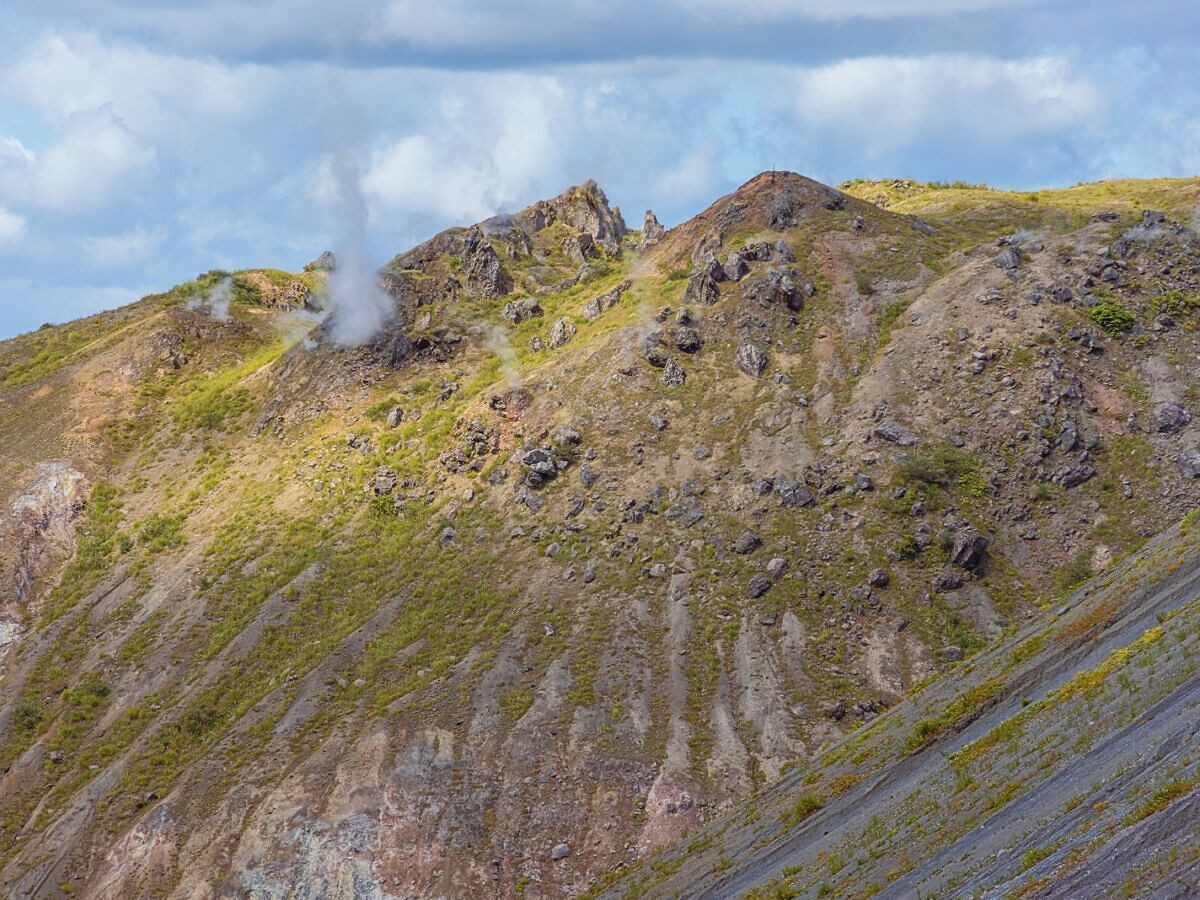
Mount Usu is restless. It erupts every twenty to fifty years. Reshaping the map each time. In 2000, mudflows tore through Toyako Onsen, that hot spring town on Lake Toya. Over sixty-five new craters appeared. Bowl-shaped depressions from lava and ash explosions. Roads buckled. Bridges vanished. Houses crumbled. National highways turned into debris fields.
“All natural phenomena have two sides: beneficial and destructive,” Egawa says.
Hot springs heal you. Then they kill you. Paradoxical, maybe. But true here.
Remarkably. Nobody died in 2000. Not one. Scientists tracked seismic signals early enough for a mass evacuation. A textbook success. The first of its kind.
The Decision To Leave Things Broken
They could have rebuilt. Concrete over concrete. Erase the pain.
Officials decided otherwise. A deliberate choice. To leave the uplifted roads twisted in the air. To let nature reclaim the mud-filled ruins. To turn the destruction into an interpretive landscape within the Toya-Usu UNESCO Global Geoplanck. The ruins stay. They speak for themselves.
Resident voices mattered. Scientists weighed in. The goal? Balance safety with memory. Teach the future.
“Decisions were made through discussion: what remains, what is removed, what is rebuilt.”
Now, the Konpira-yama Foot Trail offers the evidence. 1.4 miles of shock. It follows the valley where Mount Konpira sent mud and trees crashing down. I walk the trail. I see it everywhere.
A public bathhouse half-buried in dried mud. An apartment building leaning like a drunk. Roads twisting upward, lifted by the earth’s rage. Protective sabo dams sit nearby now, ready to trap the next flow. But the damage? That’s still there.
Windows blown out. Staircases leading to nothing. A moment frozen mid-step. It feels less like a graveyard and more like a snapshot of ordinary life interrupted.
For Egawa and other Meisters, these are tools. Tangible reminders. Violence made solid. She wants visitors to carry this awareness home. Preparedness. Not panic. Just knowing.
Following the Mud
Egawa walks us through the chaos. It didn’t happen in a second. It took months. The ground swelled. Then it cracked. Ash piled on roofs until gravity won. Then came the mud. Surging downhill. Taking everything.
We circle the Yasuragi House bathhouse. First floor gone under hard clay. Nearby, an apartment shell shows the impact marks.
Konomi Bridge? It got carried nearly 300 feet. Dropped into an apartment. Resting there now. No one moved it for dramatic effect. No one staged this. The placards just state facts.
Visitors usually shock themselves first. They compare old photos with the scarred land. Ordinary people lived right there. Until they didn’t. It feels personal. Recent. Haunting.
Usu is not asleep. It watches. It will wake again. This shapes every day here.
Craters That Won’t Wait
About thirty craters from 2000 still steam. Yu-kun Crater is the biggest. You can walk to it alone in summer. From April to November. Winter is different. Guided only. Other zones stay locked away. Social media explorers can’t just wander in. Special permits. Meister-led tours. Strict boundaries.
The walk leaves a mark. It stays with you. Standing on a volcano that destroyed a town. And hasn’t finished. It monitors. It waits. It will erupt.
This is where Egawa matters most. She preserves memory. But also context.
“People know they’ll witness at least two eruptions in a lifetime. They understand the reality. They also know the volcano gives blessings: springs, scenery, food.”
Nutrient-rich soil feeds the food. The springs relax the bones. The risk? Accepted.
We head back. Snow covers the path. A quiet settles on the group. Reflection. Mount Usu isn’t just the 2000 event. It’s ongoing. It changes. Approach it with respect. Watch the seismometers.
How to Go There
Mount Usu sits in the Toya-Usu Geopark, Hokkaido. Roughly two hours from Sapporo.
The Trails:
– Konpira-yama Foot Route: Free. Open independently from late April to mid-November.
– Winter (Nov–April): Guided tours only.
The Restricted Zones:
– Always require a certified Volcano Meister guide.
– Book through services like Sotoasobu.
Starting Point:
– Toyako Visitor Center.
– Allow 90 minutes minimum. Signage is in Japanese and English.
– Don’t rush. Let the silence speak. 🏔️