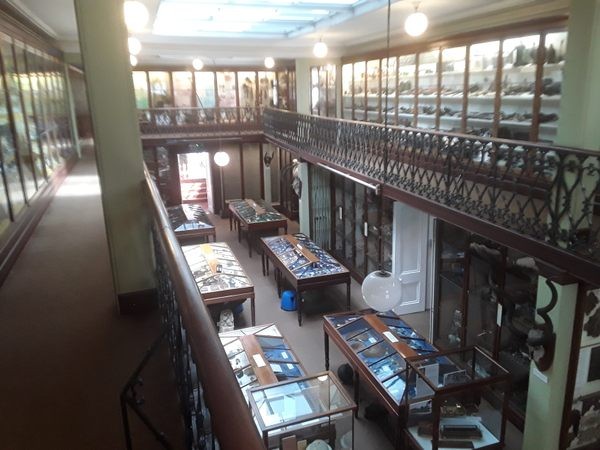
Built in 1846. Designed by George Buckler. This Victorian shell sits on the ghost of Wisbech Castle, purpose-made for objects that once languished in two damp rooms down Old Market Place.
Back in the day, only subscribers could step inside. The Wisbech Literary Society shared the air. They merged properly in 1877. Maybe that’s why a modest Cambridgeshire market town holds the actual manuscript of Charles Dickens’ Great Expectations. It feels disproportionate. A tiny box. A massive legacy.
Byron’s early poetry collection, Hours of Idleness, is there too. And the stuff of Thomas Clarkson, the abolitionist who dragged the West African world into lecture halls starting in the 1700s. He used artifacts to make a point about slavery. Some of it—specifically his lecture chest—returned from a loan in March 2026, still hiding while it found its footing.
Natural history piles high. Ichthyosaur fossils. A small orca skeleton. Even bits about the Wisbech and Upwell tramway.
It’s a jumble. Eclectic is the polite word. But the building? The building wins. It’s a time capsule of Victorian self-importance, frozen in stone.
Forget the grand front door. It’s sealed up. You duck into a small courtyard at the side. Pay £5. They give you a 12-month pass. You wander through the history, leaving the modern world outside where the pavement cracks.
Why does a town this size hold the soul of a novel?
We walk in. The lights are on.