The Black Death didn’t just kill people. It broke the world.
In the late 14th century. England was a mess. Recovery from the plague? No. The war with France was burning money. The population was gone. And labor was scarce.
When the government slapped a new tax on the population, things got violent. Fast.
Thousands marched on London. Officials died. A teenage king stood alone against the biggest uprising medieval England had ever seen.
This is the story of the Peasants’ Revolt of 1481 —wait, 1381.
Labor Shortages and Backward Laws
England in the 1300s was reeling. The plague hit in 1348. Another wave in 1361. Then another in 1369.
A third to half the population vanished.
The nobles hated it. But the peasants knew something the kings didn’t.
Scarcity equals power.
If labor is scarce, you pay more. Simple market logic. Free laborers and serfs alike realized they could demand better wages. Landlords needed their fields plowed. They couldn’t just order peasants to work anymore. Workers could walk to the next village for a better deal.
So the Crown panicked.
They issued the Ordinance of Laborers in 1349. Then the Statute of Laborers in 1351.
The goal was brutal. Freeze wages at pre-plague rates. Force people to work for whatever the government said was fair. Restrict movement. Hold tenants in place like cattle.
It was state-sponsored economic denial.
Did it work? No. Wages drifted up. But it created a deep, lasting anger. People got fined for asking for what the market would have paid them anyway.
Then there was the legal trap of villeinage.
Villeins were serfs. They owed labor services. Fees. Fines. They needed permission to marry. They needed permission to move.
Meanwhile, free laborers were earning good money and breathing free air.
The contrast was glaring. The ancient social order suddenly looked like a fraud. A rigged game designed only to help the lord.
The Tax That Broke the Camel’s Back
To make matters worse, there was the money problem.
The Hundred Years’ War against France had started in 1337. It was going badly by the late 13709s. Expensive campaigns in France produced nothing but debt.
King Richard II was just a boy. He came to the throne at age ten in 1377. His uncle, John of Gaunt, was pulling the strings.
Parliament had to raise cash. So they invented the poll tax.
Not a tax on land. Not a tax on wealth. A flat fee per person. Over a certain age.
The first one in 1377 was okay. The second in 1379 was annoying. The third in 1380? A disaster.
One shilling per adult.
It was flat. Regressive. Brutal on the poor. Tax evasion was everywhere.
By spring 1381, assessors saw the shortfall. Massive. So they sent commissioners to the counties to find the cheaters and collect the debt.
That’s when the fuse lit.
From Essex to Kent: The Spark Ignites
It started in Fobbing, Essex. Late May 1381.
Thomas Bampton, a royal commissioner, arrived. He asked for the tax.
The villagers said no. They drove his clerks away.
The news spread. Neighboring villages joined in.
Then came Robert Belknap. A royal justice sent to punish the ringleaders. He walked into an armed, organized crowd in Essex. They forced him to swear he’d never sit on such a commission again. They sent him packing. Some say his clerks were killed.
Essex was in revolt.
Kent rose almost at the same time. This is where the rebellion found its spine.
In Dartford and Rochester, early risings happened. Rochester Castle was stormed. Prisoners were freed.
At Maidstone, the rebels gathered. They broke into the archbishop’s prison. They released John Ball.
Ball had been in jail for years. Excommunicated. A radical priest who preached against the church’s wealth.
He gave the revolt its voice.
His argument was simple. Radical. Christian.
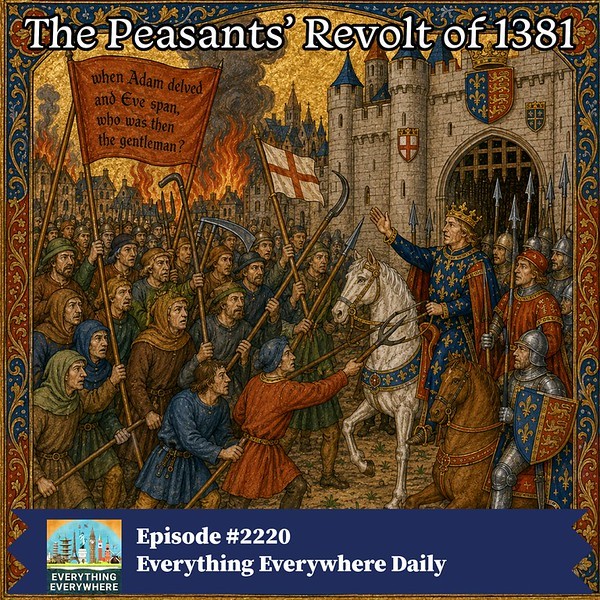
“When Adam delved and Eve span, Who was then the gentleman?”
Adam dug. Eve spun thread. No lords then. No aristocracy. Just humans working.
Privilege was an invention. Not God’s law.
Then Wat Tyler showed up. Not much is known about his early life. He emerged as the commander of the Kentish mob.
They marched on Canterbury. Entered the cathedral. Demanded assurances from the monks. Then turned north toward London.
London Falls
By June 1381, two armies converged.
Essex rebels under Jack Straw (or whoever that was) came from the north. Kent rebels under Wat Tyler came from the south.
London wasn’t safe. The city was angry too. Workers resented foreign merchants. Resented the elite who ran things.
On June 12, John Ball preached to the mob at Blackheath. Outside the city walls. He preached equality.
The next day, June 13. The gates opened.
Sympathetic citizens opened London Bridge and Aldgate.
The rebels poured in. But this wasn’t just a riot. They had targets. Discipline.
First stop: The Savoy Palace. John of Gaunt’s home. The man they blamed for everything.
They burned it down.
Chroniclers say they didn’t loot. They destroyed treasures. Threw gold and silver into the Thames. “Justice, not theft.” They executed one of their own for stealing.
Foreign merchants—especially Flemish traders—were singled out. Economic rivals. Many were killed.
The King Meets the Mob
June 14. The young king, Richard II, only 14 years old, rode out.
To Mile End. He met the rebels.
He offered concessions. Sweeping ones.
Abolish villeinage. Fix rents. A general pardon. Free trade everywhere.
The Essex rebels bought it. They dispersed. Went home. Trusted the boy king.
But while Richard was at Mile End, another group went to the Tower of London.
It was under-defended.
They seized it.
They beheaded Simon Sudbury. Archbishop of Canterbury. Also the Chancellor.
They executed Robert Hales. The Treasurer.
Several other officials. Heads were put on London Bridge.
See the distinction? The king was the ally. The councilors were the traitors. The people wanted the king to save them from his bad advisors.
The End at Smithfield
June 15. Smithfield. Just outside the walls.
The remaining rebels were still there. Wat Tyler led them.
Tyler’s demands were harder. Radical.
Abolish all lordship except the king’s. Redistribute church wealth. One legal status for everyone.
A scuffle broke out.
Tyler was killed. By one of the king’s attendants.
Tyler died of his wounds soon after.
The crowd was ready to charge. Violence everywhere.
What did the 14-year-old king do?
He rode forward. Alone. Into the angry mob.
He called out. He said he would be their leader. He would give them everything. He told them to follow him out of the city and disband.
It took guts. Maybe stupidity. It worked.
The mob left.
The Bloodbath
Richard didn’t keep his word.
Never does.
The charters were revoked. The concessions vanished.
Commissioners traveled through the counties. Arrests began. Rapid trials.
Executions were the main feature.
Wat Tyler was dead.
John Ball was caught near Coventry. Brought to St Albans. Tried in the king’s presence. Executed July 15. Hanging, drawing, and quartering. A brutal death.
Jack Straw. John Wrawe. Geoffrey Litster. Dozens of local leaders.
All dead.
In the short term? Total failure. The revolt was crushed.
Why It Mattered
But look closer.
The governing elite was shaken. Scared.
They realized they couldn’t just extract wealth from ordinary people without getting killed for it. No more nationwide poll taxes in medieval England after that.
The revolt didn’t end serfdom overnight. But it broke the back of the system.
The Black Death had changed the demographic reality. The laws couldn’t hold back the market. The peasants had proved they could organize. That they could force a king to bend.
The social hierarchy was cracking.
The Peasants’ Revolt of 381 showed that the old order wasn’t invincible.
It was the beginning of the end for feudal obligations in England. The system began to disappear shortly after.
Ordinary people against corruption. Against unjust taxes.
They lost. But the winners? They started losing, too.