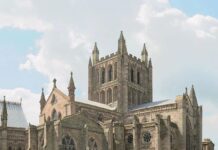
If you are planning a trip to Pittsburgh, you need to start your itinerary here.
The Andy Warhol Museum sits on the city’s north shore, right where the Allegheny and Monongahela rivers meet to form the Ohio. It isn’t just a gallery. It is a massive archive, born from the initiative of John Warhola, Andy’s brother, who wanted to preserve his sibling’s legacy. Opened in 1994, this place holds the largest collection of Warhol’s work in the world. In fact, it is the only museum in the United States dedicated entirely to a single living artist, a distinction that keeps tourists and art students flooding through its doors.
Why This Museum Matters
You might think you know Warhol. You know the soup cans. You know the Marilyn Monroe silkscreens. But walking into this museum is different from flipping through an art history textbook.
The building itself was designed by architect Richard Gluckman, who created a space that feels both industrial and intimate. Located at 117 Sandusky Street, the entrance is actually on 7th Street, a detail that trips up first-timers. Once you’re inside, you are walking through 82,000 square feet of curated chaos.
The collection is staggering. We aren’t talking about a few famous paintings. We are talking about:
- 900 paintings
- 2,000 works on paper
- 1,000 original prints
- 4,000 photographs
- 77 sculptures
- 4,350 films and videos
Most people don’t realize how deep the film archive goes. Warhol wasn’t just a painter; he was a filmmaker who pushed the boundaries of cinema in the 60s. Seeing those films in a dedicated space, rather than on a laptop screen, changes how you understand his obsession with time, repetition, and the mundane.
Logistics: Getting There and What to See
The museum is firmly planted in Pittsburgh’s Cultural District, but it has its own identity. It’s not tucked away in a quiet suburb. It’s right there, visible from the riverfront.
When you plan your visit, keep in mind that this is the largest single-artist museum in the U.S. That means crowds. If you want to see the films without standing behind a wall of tourists, go early in the day. The lighting in the galleries is controlled, but the sheer volume of work means your eyes will get tired. Take breaks. Look at the photographs. They are often more revealing than the bright, pop-art paintings.
“This is not just a museum. It is a monument to a mind that saw the future of media before anyone else did.”
Planning Your Trip
The museum is a key stop on any Pittsburgh travel guide. It is not a “maybe go if you have extra time” spot. It is a “plan half a day minimum” destination. The exhibits are dense. You will want to read the labels. You will want to sit for a while and watch the Empire film loop, which lasts eight hours, or pick out a shorter clip to understand his experimental edge.
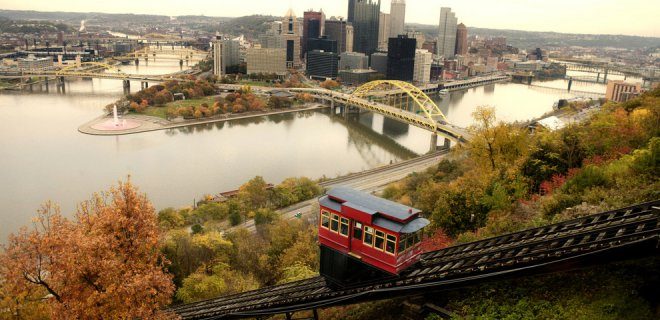
Mount Washington: Pittsburgh’s best-preserved view
Your Pittsburgh tour begins at Mount Washington. This area feels more like a destination than a suburb. Although it is small at about 3 square kilometers in size, it packs a punch that far outweighs its weight. This hilltop enclave is home to around 9,000 residents and is probably the city’s most photographed and popular tourist attraction.
Why here? The place is a draw. Perched high above the Monongahela River, it offers panoramic vantage points not found anywhere else in the city. But it’s not just the landscape. The area has developed into a center of fine dining restaurants, boutique hotels and casual cafes. The upscale shopping area is surrounded by historic brick buildings. The city is crowded even early in the morning. Full of energy. It’s noisy. This is exactly what the tourism community needs.
If you are planning a trip, visit Mount Washington first. The energy is contagious. The restaurant is worth the wait. The views? Unbeatable. As soon as you step off the bus, you can see why tourists flock here.
Roberto Clemente Bridge
The Roberto Clemente Bridge is a short walk or drive from the heart of Mount Washington. This is not just an intersection. This is an icon. Named after the legendary Pittsburgh Pirates baseball player, this bridge connects the South Side to downtown Pittsburgh. But the real value for travelers is the perspective it provides.
When you walk there, you’ll be right above the Monongahela River. The steel structures frame the city’s skyline industrially and elegantly. This is a popular spot for photographers and strollers. The bridge is brightly lit at night, making it a safe and beautiful night walk. The Point Bridge and Fort Pitt Bridge can be seen in the distance, creating a layered view of Pittsburgh’s infrastructure.
Just don’t drive by. Please walk across. take it easy look up See below. The Clemente Bridge is more than just concrete and steel. It serves as a reminder of the city’s history and dedication to its sporting heroes. It’s a physical connection between communities, but also an emotional connection to the soul of Pittsburgh.
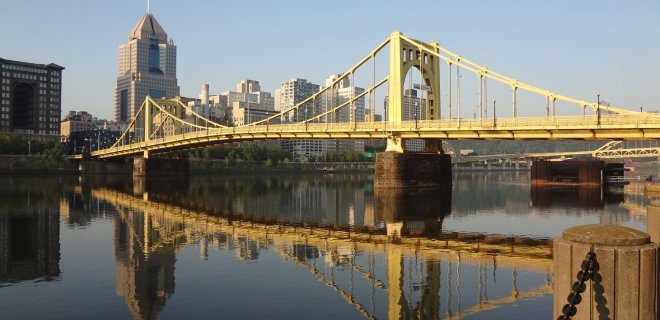
Roberto Clemente Bridge: A steel icon spanning the Allegheny River
The Roberto Clemente Bridge was built between 1925 and 1928 to span the Allegheny River. If you’re looking for an iconic Pittsburgh attraction, this suspension bridge is a must-see. It is 269 meters long and crosses the water at a height of 24 meters above the river.
It has had many different names over the decades. Locals still call it the 6th Avenue Bridge or the Jensen Bridge, but the current name honors the Pittsburgh legend. Designed by the famous American civil engineer John Roebling, the structure was more than just infrastructure. It is a symbol of the city’s resilience and history.
This bridge is a must-see for travelers planning a trip to Pittsburgh. This is one of the best places to view the city skyline, especially at sunset. Steel cables and stone towers create a dramatic backdrop for photos, connecting the North Side to the city center in an industrial yet stylish way.
“The Roberto Clemente Bridge is now considered one of Pittsburgh’s most revered symbols.”
Allegheny County Courthouse
On the north side of the river stands another stately building, the Allegheny County Courthouse. Completed in 1916, this Romanesque Revival building is one of the finest courthouses in the United States.
The exterior has granite from various states, which creates a patchwork of colors that change according to the light. The interior is equally impressive, with high ceilings, marble floors and stained-glass skylights flooding the central rotunda with natural light.
The courthouse is free to visit, and self-guided tours are available. You can also stroll through the historic halls and admire fine craftsmanship in the public galleries. Located opposite the Roberto Clemente Bridge, it’s a great stop when exploring the North Side.
Why risk missing it? The bridge is an eye-catcher, but the courthouse has history. Together, they form a visual anchor for Pittsburgh’s Northside and offer a glimpse into the city’s past away from typical tourist traps.
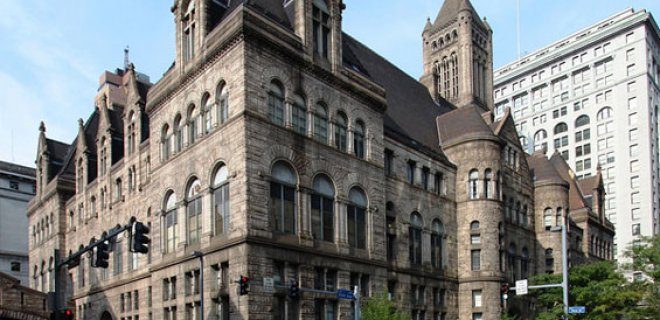
Monongahela County Courthouse
Built between 1883 and 1888, this handsome stone building is part of the city’s architectural history. It was designed by the American architect Henry Hobson Richardson. You can spot the work immediately. It is a 5-storey building. It is 30 meters high and reaches into the sky.
The building is located at 436 Grant Avenue. It has been on the National Register of Historic Places since 1976. That is a long time to be considered significant. The tower is a real highlight. The height is 76 meters. It dominates the horizon.
The style is Romanesque Revival. It feels very solid. It feels permanent. Pittsburghers consider it part of their identity. It is more than a court. It is a landmark.
Three Rivers Heritage Trail
As you exit the courthouse, you can walk the Three Rivers Heritage Trail. The path is well-maintained. It runs along the water. You can see three rivers merging together. This is a great way to see the city from a different perspective.
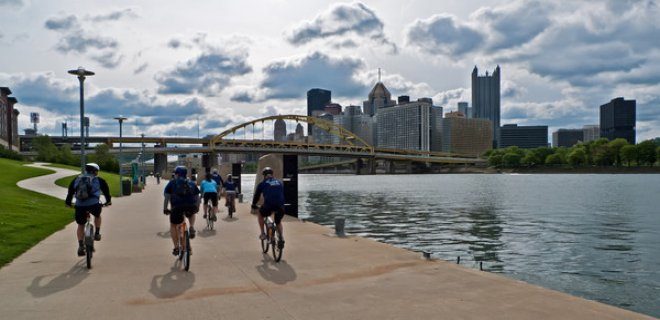
For those planning a trip to Pittsburgh, the city’s identity is defined by the confluence of the Allegheny and Monongahela rivers to form the Ohio. But the real magic happens at the edges. The Three Rivers Heritage Trail is more than just a trail. A 40-kilometer-long green area surrounding the city center that offers the most dramatic city views in the northeast.
This is not a passive walk. This path is wide, well-maintained and very popular with locals who consider it their living room. Even if you visit early in the morning, you will not solitude. The concrete are often filled with joggers, cyclists and dog walkers, all moving to the synchronized rhythm that defines the city’s pace.
Navigating the Three Rivers Heritage Trail
Why do travelers keep returning to this particular route? It’s the accessibility. You can park almost anywhere downtown and step directly onto the trail. Whether you come for fitness or a photo ops, the logistics are straightforward.
This path connects the main landmarks. You don’t just walk down an empty pavement. With the soaring skyline behind you, you pass under steel bridges alongside historic mill buildings. smooth surface are ideal for cyclists. The height is gentle for pedestrians, so you can easily participate in the activity regardless of your physical condition.
“This trail offers a unique perspective on Pittsburgh, separating you from the traffic while staying connected to the city’s history.”
Heinz Memorial Chapel: Gothic anchor
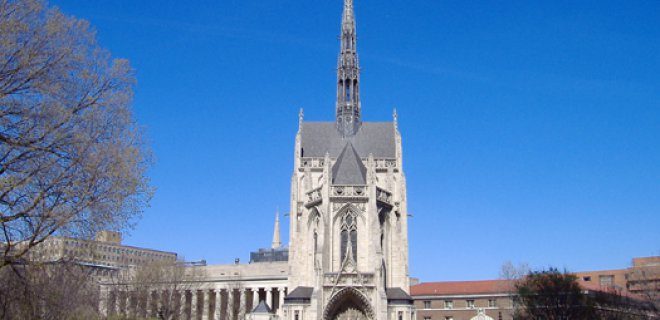
As you walk along the river, you will eventually come to the Heinz Memorial Chapel, one of the most visually arresting structures in the area. Located on the edge of the University of Pittsburgh campus, the building is a notable departure from the area’s typical industrial aesthetic.
It was built in a Gothic Revival style similar to Oxford and Cambridge Cathedrals rather than Pittsburgh. This contrast is jarring in the best way possible. If you are looking for a place to rest, grab a coffee and stare at the intricate stonework, this is the place. It has a peaceful atmosphere that stands out from the bustling riverside.
Although the church is free to enter during certain hours, it is primarily a place for worship and quiet reflection. Check the university schedule if you plan to go inside. Even from the outside, the spires and the stained glass windows glow in the afternoon light. This is a popular location for wedding photos, so you may have to share a bench with the newlywed couple and their photographer.
Practical Tips for Your Visit
Timing is important. If you want to solitude, go at 6 AM. If you want to energy, go at 5, when it’s busier after work. It’s lit up at night so it’s safe to walk around at night, but when the sun goes down the atmosphere changes completely.
cladding. Even in calm weather, river winds can tear your jacket. In addition to walking, the water can also get muddy during the rainy season, so wear shoes with good grip.
Which route should you choose? To visit the famous fountain where the rivers meet, start at Point State Park. If you want to see this Gothic masterpiece up close, head to the Learning Cathedral. or
University of Pittsburgh Gothic Center
As you walk around Oakland, you will be stopped by the huge Cathedral of Learning building. This is more than just a university building. It is a vertical city covered with limestone. Built between 1933 and 1938, this building is a monument to interwar ambition. Architect Charles Klauder was inspired by the great cathedrals of Europe and applied it to an academic context. The result was a massive Gothic Revival structure that dominated the skyline.
The 78 meter high building was both an architectural achievement and a logistical challenge. For decades, this building held the title of tallest educational building in the world. It was placed on the National Register of Historic Places in 1983, cementing its status not only as a school but also as a cultural landmark. Why is it important for travelers? Because it turns attending class into an immersive experience in history.
The tower is basically a collection of themed rooms. From medieval halls to Japanese gardens, each floor is dedicated to a different theme or culture. When you visit, you’ll find that it’s not just about looks. You are stepping into a carefully selected piece of world history. Admission is generally reduced or free for students, but visitors should check current policies. The real value is in the Nationality Rooms. These are about 24 classrooms designed by immigrants and their descendants to represent their homelands.
When you walk up the spiral staircase or take the elevator, you notice the lights. Gothic windows fill the space with dramatic light. It feels like the atmosphere here is different. Heavier with history. Lighter with possibility.
“In this place, the past is not behind glass, but in front of our feet.”
For anyone planning a trip to Pittsburgh, it would be a mistake to pass this place up. It offers visual details that street museums sometimes lack. Intricate carvings, stained glass and pure verticality. It challenges your understanding of academic architecture. I take home more than just pictures. I feel the greatness of human endeavour.
The tower is now silent, but the footsteps of generations still echo. What do you get out of it?
Above Pittsburgh: The Cathedral of Learning
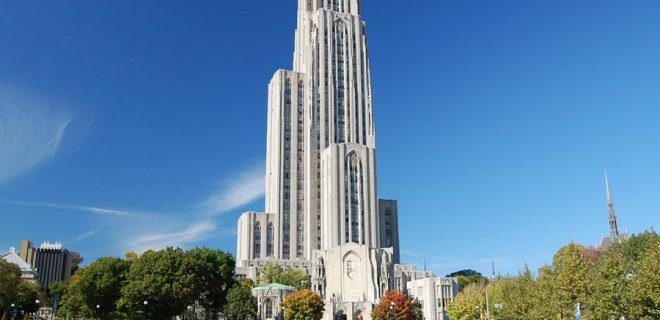
It doesn’t look like a church. not really. The 42-story and 163-meter-high Cathedral of Learning in Pittsburgh feels more like a skyscraper than a place of worship. Dominating the skyline, the behemoth made of limestone and steel has been the spiritual and architectural symbol of the university since its construction in 1937.
The construction time alone was amazing. The project lasted from 1926 to 1936, a decade full of difficulties and architectural ambitions. Designed by Charles Klauder, the building combines two different styles: Gothic Revival and Art Deco. The former has pointed arches and vertical lines, while the latter also has sophisticated geometric details throughout. It’s a hybrid and it works.
The building is 6 hectares in size, which makes it spectacular. There are about 2000 rooms. This number alone will change your perspective. This is more than just a cathedral. This is a vertical city. For anyone planning a trip to Pittsburgh, to miss this landmark is to miss the city’s most important historical site. It is widely regarded as an absolute must-see.
Its sheer scale draws you in. As you get closer, you realize there’s more to it than just a facade. You are looking at an institution. The cathedral is one of the main tourist attractions in Pittsburgh, important not only for its height, but also for what it represents. This is a testament to the optimism and intellectual ambition of the early 20th century.
If you’re wondering where to go next, the answer is simple. Stay here. Spend some time in the Nationality Rooms, scattered throughout the building. Each room represents a different country and is furnished and decorated with authentic objects. It is a microcosm of the world in the tower.
Why was it built this way? To unite a diverse student body under one roof. To create a sense of belonging in a rapidly industrializing and changing city. The architects wanted something permanent, rising above the smoke and steel of the mills below.
Today it is a different kind of landmark. The smoke has cleared. skyline has become more beautiful. But the cathedral has survived. It remains the tallest academic building in the Western Hemisphere. It’s still impressive. It’s still impressive.
You can’t miss it. Located in the Oakland neighborhood, in the heart of the university campus. If you have a car, parking can be a hassle, but it’s worth it. Just to see it from the ground is enough to make you look up. To go inside? That’s another story. History is here.
The rooms are quiet. The light is different here. This is not the energy of the hustle and bustle of the city. This is much slower. Something heavier. You walk through the halls, I think of the thousands of students who have walked through those same doors. The ones who studied here. graduates. Those who left.
The building doesn’t care. It’s standing there. 163 meters of limestone and memory. It was strange, a cathedral used more for study than prayer. But in Pittsburgh, the distinction seems less important than the structure itself. It brings the city together in a way.