We love to blame everything else for our stress. Security lines, traffic, toddler tantrums. But the biggest risk forcing us to arrive three hours early isn’t the TSA. It’s the bag drop. Specifically, the part where you printed a tag, attached it, walked up, and then… stood there. Waiting.
I checked a bag two months ago. Charlotte. American Airlines. My kiosk rejected me instantly because the itinerary started the day before. Technicality. So I joined the Priority Check-in queue. Sat there for forty-five minutes. Watched the departure clock tick down. I made the flight eventually thanks to a mechanical delay. Did I feel triumphant? No. It sucked. And it was entirely unnecessary.
Most trips don’t require an agent. They just need a scan.
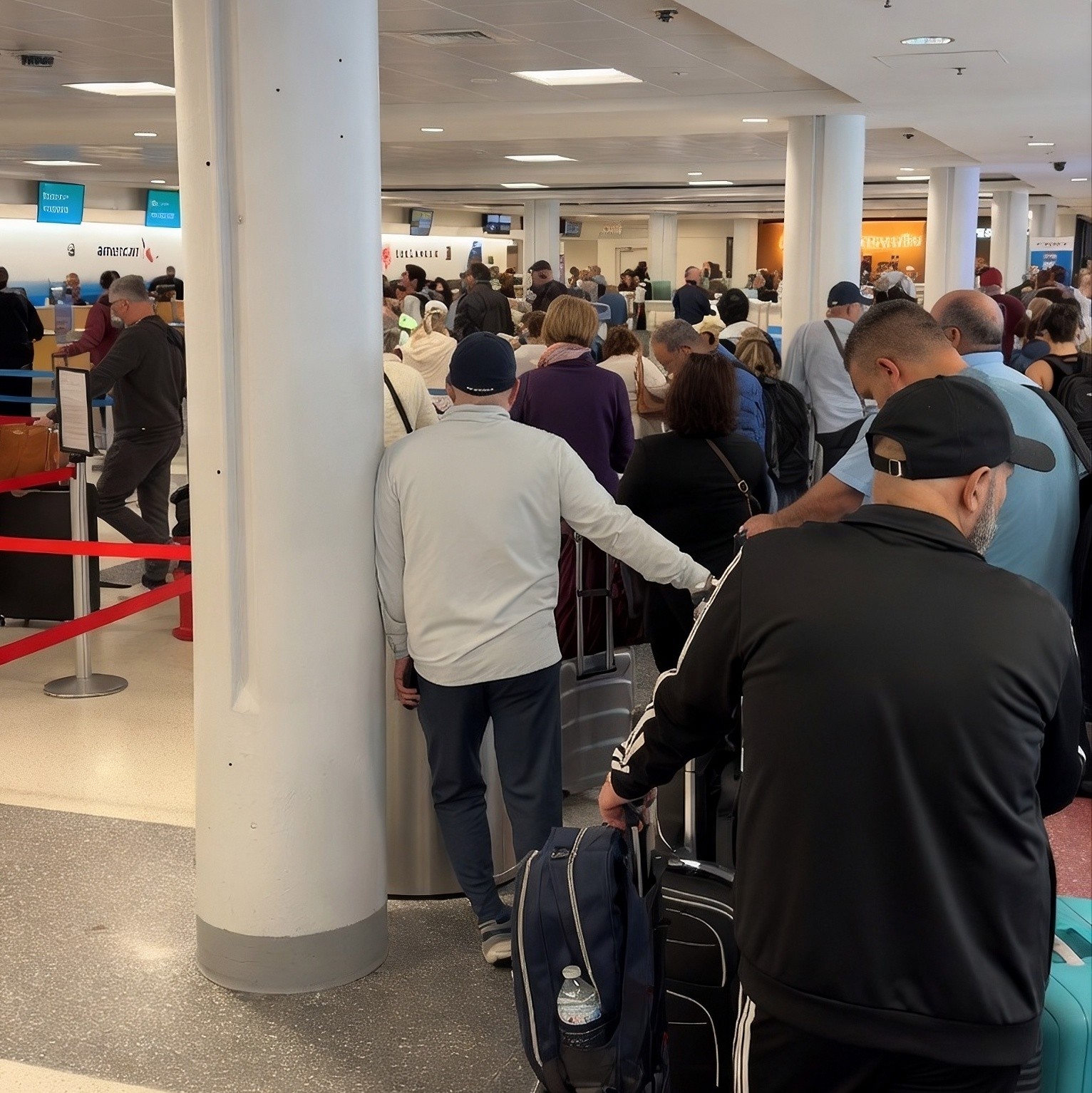
Yet here we are. One traveler recently shared an image that summed it all up. They used the kiosk. They tagged the bags. Then they waited sixty minutes. Why? Because one single employee was manually inputting data while people lined up around them. Like watching paint dry, but with more sweating.
You don’t need that. The human is a bottleneck, not a solution.
Automated bag drop exists. It works. It is fast. You print or activate the tag. Put the bag on the belt. Scan your pass, scan the tag, maybe your ID. The machine weighs it, accepts it, sends it onto the conveyor. Done. No keyboard clacking. No eye contact. Just boom — your bag is in the system.
Technology solves friction. We just ignore it.
Look at who already did the hard work. Alaska Airlines rolled this out at Seattle and Portland. Lufthansa passengers in Frankfurt and Munich scan and drop. Qantas has had “Q Bag Tag” for years in Australian domestic terminals. KLM in Amsterdam runs it smoothly.
British Airways at Heathrow? Close enough, though they add passport checks for international complexity. Aer Lingus offers an Express Drop where you weigh, tag, and go. Even their parent company, IAG, does this with Vueling. Delta and United? Finally catching up, inching toward this future.
There is zero reason to keep us in those lines in 2026.
Self-tagging should mean dropping. Not negotiating with an overworked staff member about weight limits. It shouldn’t take an hour to verify something the scale already did. The infrastructure is here. The software is here. So why the delay?
Maybe because it’s hard to admit the current model is just lazy? Or maybe the lines aren’t about security. Maybe they’re just the price we pay for bad design.
We’ll keep standing in them either way. The plane will wait for no one, but the line always gets longer.