Signage is changing at airports.
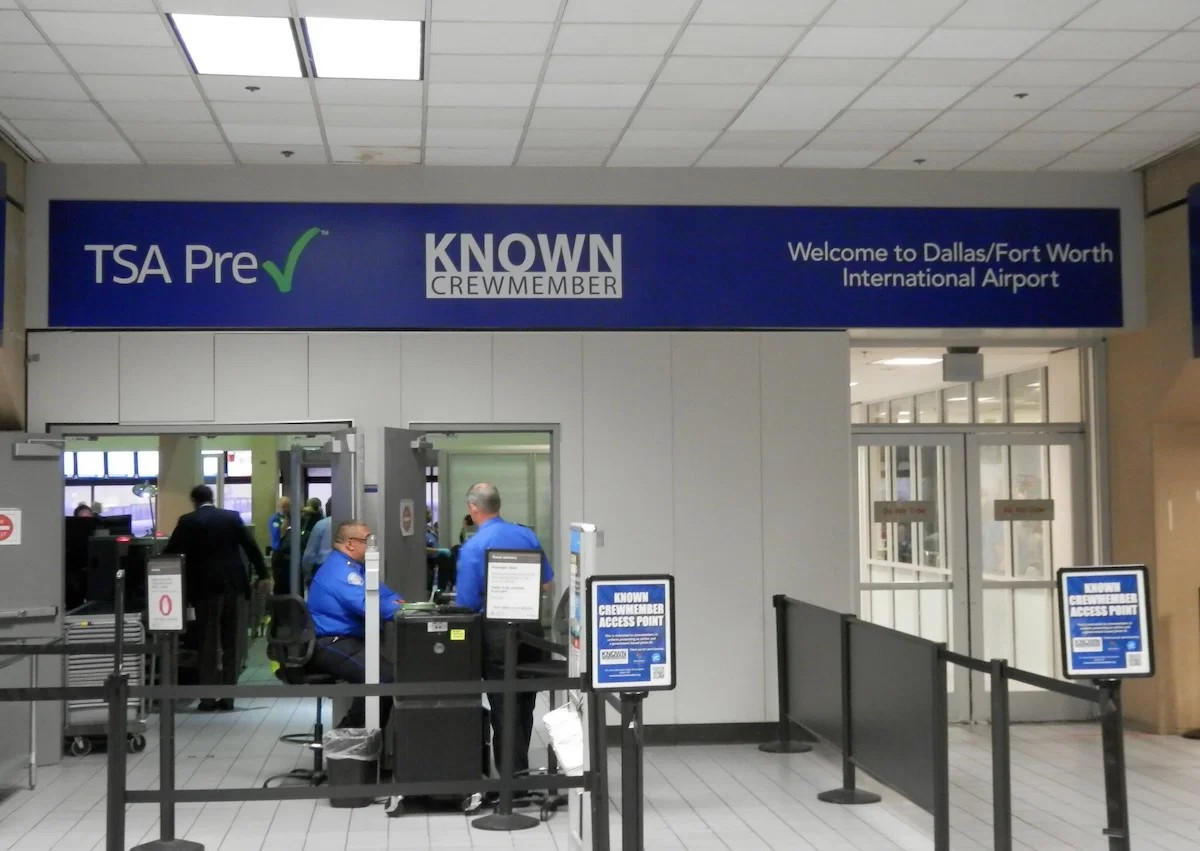
If you’re a passenger, it won’t matter. Much. But you might spot it while dragging your suitcase past security, wondering why the signs suddenly say Crewmember Access Point instead of Known Crewmember.
It’s a quiet shuffle.
The TSA is swapping the Known Crewmember (KCM program) for the new Crewmember Access Point (CMAP).
Pilots and flight attendants use this backdoor to skip the X-rays and the body scanners. Historically, they’ve walked right through after scanning a badge. Now? The rules are tightening. Just a little.
The Rollout
The switch is happening right now. June 2026 to September 2026.
By late summer, every major hub in the country will be on board.
Here is what KCM gave us: a fast lane. Show your ID. Scan your badge. Go.
Screening was rare. Random, sure, but rare. Recently, though, the random checks got heavier.
CMAP is different because who controls the keys.
KCM was a partnership. The Air Line Pilots Association and Airlines for America had a seat at the table.
CMAP? Strictly TSA business.
And there is a catch. Biometrics.
Face scans, fingerprints, the digital stuff. They call it enhanced security. It is certainly more friction.
The Cost
Someone pays for this friction.
The airline does.
Nineteen bucks a pop for every registered crewmember.
Add it up across American, Delta, and United and you hit about $6.8 million a year.
Is that expensive?
For a corporation? Not really. American Airlines pulled in $111 million in profit last year alone.
It is rounding error for them. For the TSA? It’s revenue.
Why The Switch?
Rumors started months ago. Whispers that crews were using these lanes to smuggle things.
We aren’t talking about forbidden lighters.
Drugs.
Cash. Kilos of it.
The logic was simple. Why walk the line if you never get stopped? If you’re a new flight attendant and you can make your annual salary in a couple of risky trips… why not?
The theory went that CMAP would force consistent screening. Stop the flow.
Did it work?
Officially? Not really.
The TSA says CMAP improves “security, effectiveness, and consistency.”
Vague language. Bureaucratic fluff.
There is no sign that pilots are suddenly being scanned every time they clock in.
The changes don’t seem to be that drastic, at least based on initial reports
Maybe it isn’t about catching smugglers. Maybe it is just about control.
Biometrics mean better data. Better tracking. If something goes wrong, the TSA knows exactly who walked through which door, and when.
Is stopping drug smugglers a side benefit?
Probably. But is it the main driver?
Hard to say. The TSA’s job is to stop planes from exploding, not to be a narcotics squad.
Though, honestly, if keeping fentanyl out of the skies is the side effect?
That doesn’t seem like a bad outcome.
The bottom line is boring.
The program still exists.
You can still fly without security if you fly the plane.
Just now, your face belongs to the government a little bit more than it used to.