The water should have saved them. It usually does.
A Kenmore Air seaplane didn’t.
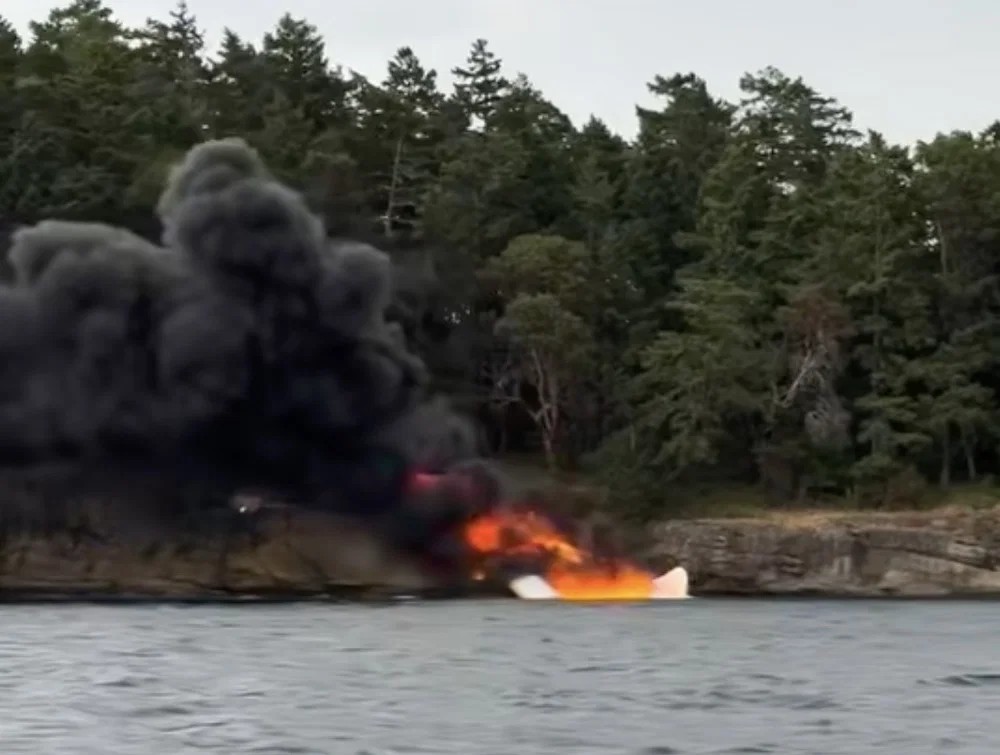
On Thursday, July 23, the de Havilland DHC-3 Otter — flight number 140 — tore into the rocky shoreline near Sucia Island. It wasn’t a gentle splash. The aircraft, registered as N709KA, struck the coast after a failed attempt to ditch in Shallow Bay. All 11 souls onboard escaped. One remains in critical condition. The rest were hurt but alive.
This wasn’t just another Tuesday for a carrier that prides itself on an 80-year safety record. Kenmore Air is the king of the Pacific Northwest skyways. They know water. They know turbulence. This looked like bad luck meeting physics, hard.
What exactly happened during the Kenmore Air emergency landing attempt?
The timeline is brutal in its brevity.
Takeoff was at Seattle’s Lake Union Airport (LKE). The destination? Eastsound (ESD) on San Juan Island. A standard 79-mile hop. The sky turned ugly en route. Rain moved in. Gusts hit 20 miles per hour.
At 49 minutes into the flight, around 5:15 PM, the plane turned. Video footage shows it flying past Eastsound, then banking sharply back toward the water. The pilot initiated an emergency procedure.
The nose touched down. For a split second, it held. Then, the Otter didn’t stop. It plowed forward, over water, until it hit the rocks lining Shallow Bay.
The impact broke the airframe. Fire followed almost immediately.
“We are grateful that everyone aboard has been accounted for.” — David Gudgel, Kenmore Air CEO
Responders from the US Coast Guard and local teams scrambled to the scene. Passengers evacuated before the flames took hold. It was chaotic. It was lucky.
Why did the seaplane crash instead of landing safely on the water?
Seaplanes have a distinct advantage in crises. Land is the enemy. Water is the runway. Or so the theory goes.
When you ditch a flying boat, the goal is smooth entry. Keep the floats aligned. Minimize drag. Stay off the rocks.
This crash defies that simple logic.
The weather was poor, but 20 mph gusts aren’t hurricane-force. Rain complicates visibility, yes, but experienced pilots fly in worse. So, what broke? Was it a mechanical failure that forced the turn back? Was it spatial disorientation in the rain? Or did the pilot misjudge the distance to the shore in the chop?
We don’t know yet. The NTSB (National Transportation Safety Board) will need to dig into the flight data recorders. They will analyze the maintenance logs of this specific 66-year-old aircraft. The Otter design is rugged, virtually indestructible in many ways. It’s not the first one to hit rocks. It just shouldn’t have happened.
Passenger status and Kenmore Air safety history
Let’s talk about the people.
There were 10 passengers. One pilot. All 11 required medical attention. Transporting them to nearby hospitals was the immediate priority. That one person in critical condition hangs in the balance. Hope is a thin thread right now, but it’s all we have.
Kenmore Air isn’t a low-cost carrier chasing marginal profit. They are the backbone of island logistics. Their fleet is old, yes. Nearly 30 turboprops. But old often means maintained. They have a reputation for reliability that spans nearly a century. A crash like this stings harder because it’s so rare.
Video from the scene shows passengers wading away from the burning fuselage. No panic, just urgent movement. That speaks to the training. It also speaks to the adrenaline.
How do investigators determine the cause of seaplane crashes?
This is where the story shifts from tragedy to forensics.
Investigating a water landing crash is messy. Water destroys evidence. Salt eats metal. Fire melts plastic.
Here is what they will look for:
– Black Box Data: The CVR (Cockpit Voice Recorder) and FDR (Flight Data Recorder) will show the pilot’s last communications and the aircraft’s exact movements. Did an engine flame out? Did the hydraulics fail?
– Structural Analysis: Why did it slide ashore? Did a float break off on impact?
– Weather Modeling: Was the wind shear worse than the forecast predicted?
– Pilot Logbooks: What was the fatigue level? How recent was the type rating for the Otter?
Until that report lands, we are left with questions.
Why turn back at all if the weather was deteriorating? Why aim for Shallow Bay if Eastsound was within reach?
The answer might be simple. Sometimes, you just run out of sky.
The wreckage sits on the rocks now. The fire is out. The questions remain.
We’ll see what the investigation reveals. Until then, the Pacific Northwest watches and waits.